
Water safety begins with education, awareness, and responsible supervision. At USA Management, we’re committed to helping families, communities, and aquatic facilities create safer swimming environments for children.
Through our KIDS SAFE program, we promote essential water safety practices, swimming skills, and drowning prevention awareness to help protect young swimmers and encourage lifelong confidence around the water.
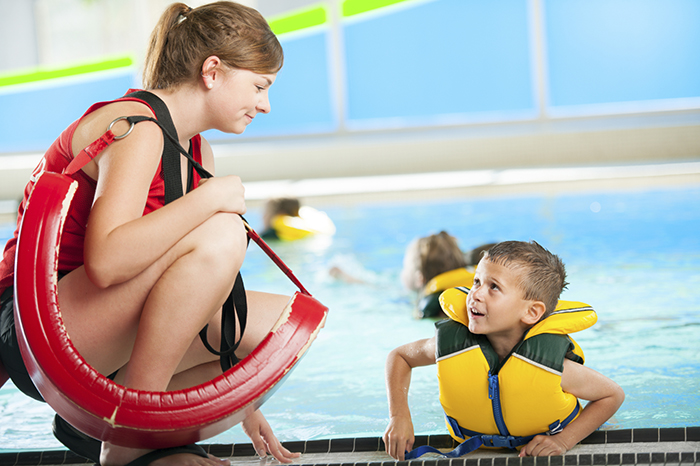
USA Management’s KIDS SAFE program is designed to help children develop essential water safety skills, build confidence around swimming pools, and understand the importance of safe behavior in and around the water.
Through engaging, age-appropriate education and hands-on learning opportunities, we help young swimmers recognize potential hazards, practice safer swimming habits, and develop lifelong water safety awareness.
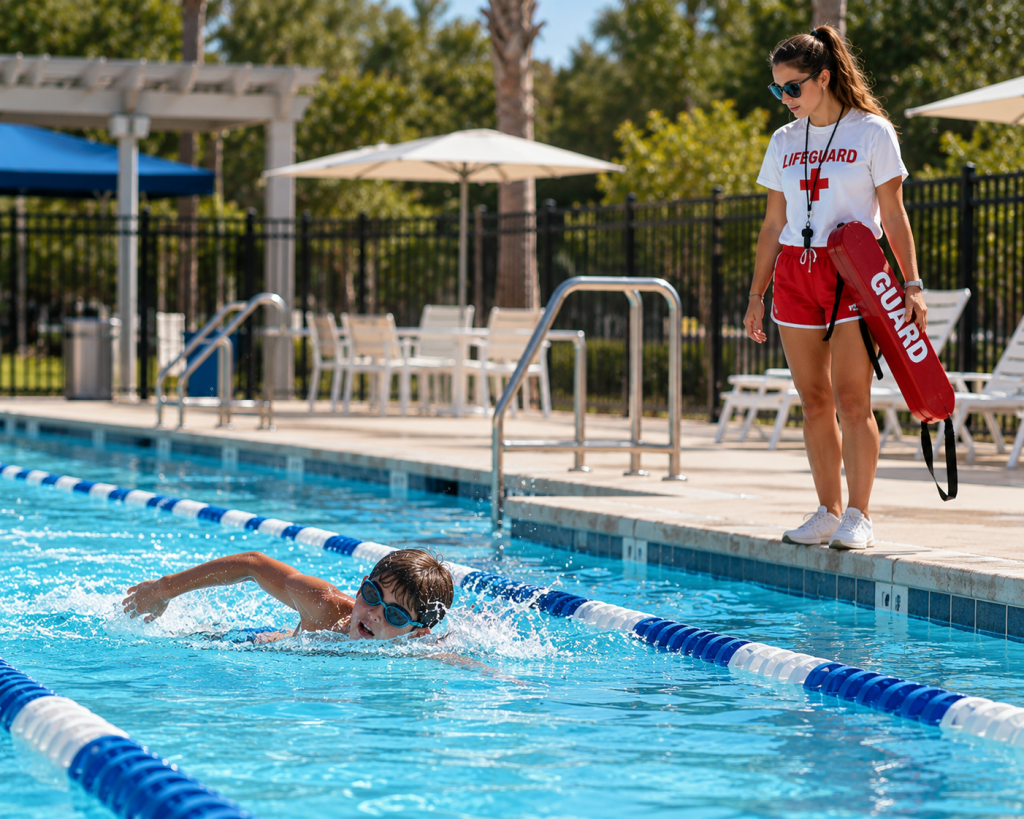
Our Swim Testing Program helps evaluate children’s swimming abilities to promote safer, more independent swimming. Under lifeguard supervision, participants must swim one length of the pool without touching the bottom and tread water for 60 seconds. Results are recorded to help determine whether a child may swim without a Coast Guard-approved life jacket or a guardian in the water.
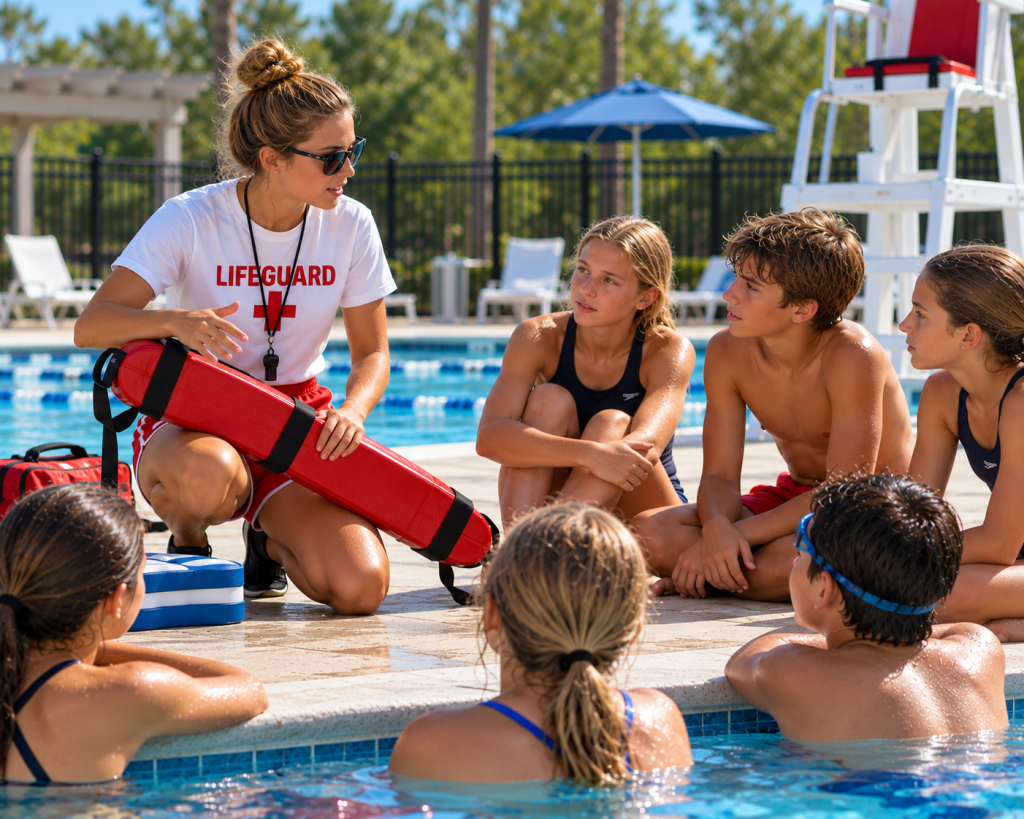
Our Junior Lifesaving Program introduces children ages 12–14 to the responsibilities of a professional lifeguard. Participants learn essential water safety skills, health and safety procedures, and what it takes to become a lifeguard. Classes are available on a first-come, first-served basis.
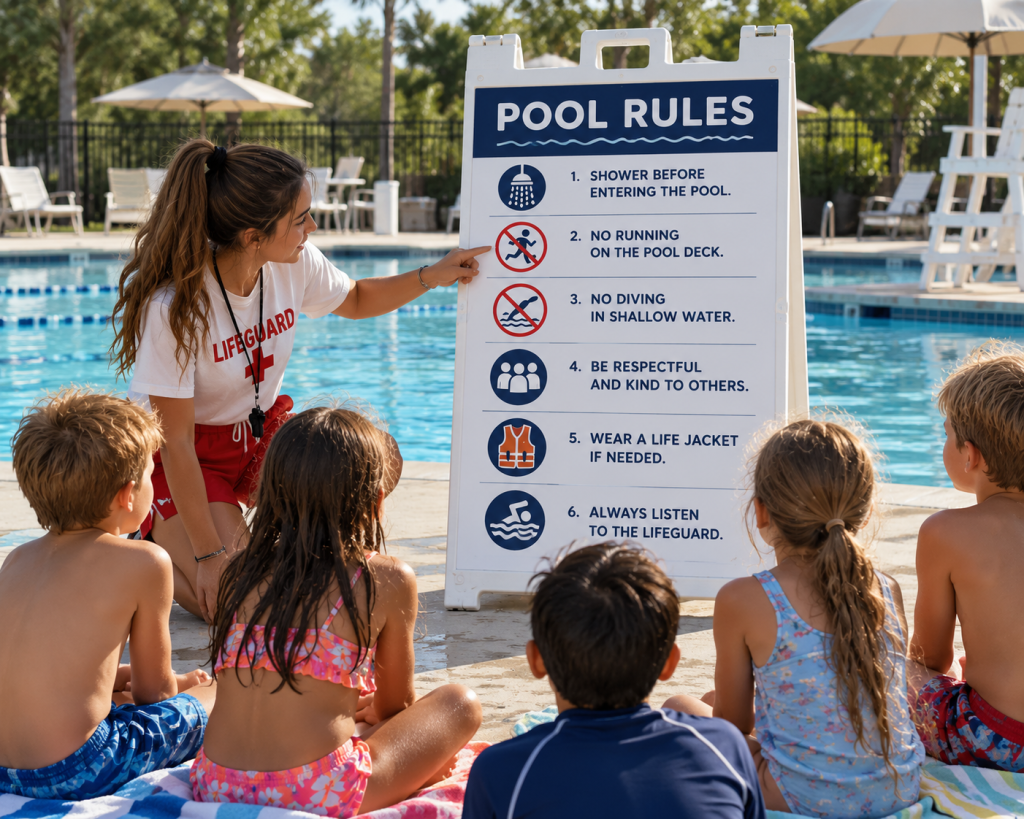
Our Rules Day Program helps swimmers and families understand their facility’s pool rules, water safety guidelines, and how they are enforced. Held at the beginning of the swim season, this 20-minute educational session promotes clear communication, consistent rule enforcement, and a safer swimming environment for everyone.
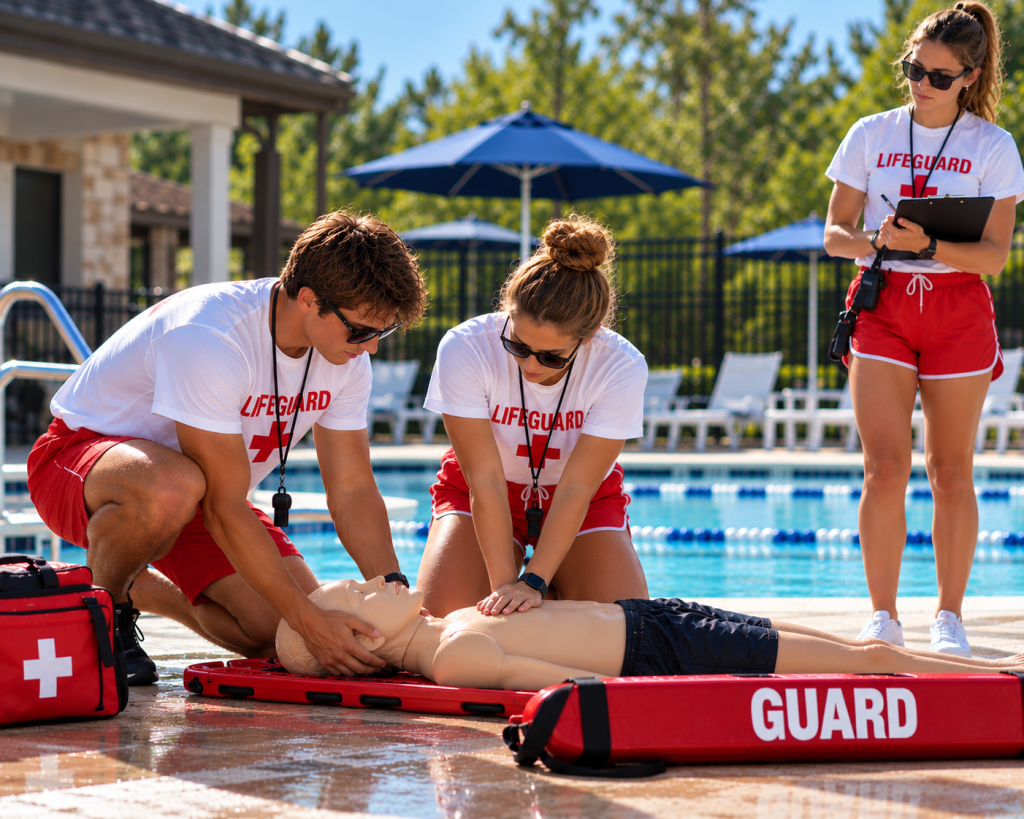
Our Safety Audit Weekends feature unannounced safety drills throughout the year to evaluate lifeguard preparedness and emergency response procedures. These exercises help ensure lifeguards are ready to respond quickly and professionally while demonstrating to pool patrons the importance of a well-trained aquatic safety team.
Water safety begins with awareness, education, and active adult supervision. Through our KIDS SAFE programs, USA Management helps children develop safer swimming habits and a better understanding of water safety.
Regardless of age or swimming ability, children must always be properly supervised in and around water. Parents and guardians should remain attentive, avoid distractions, and practice close, hands-on supervision when appropriate.
While trained lifeguards play an essential role in aquatic safety, they are never a substitute for parental supervision. Working together, we can help create safer swimming experiences for every child.
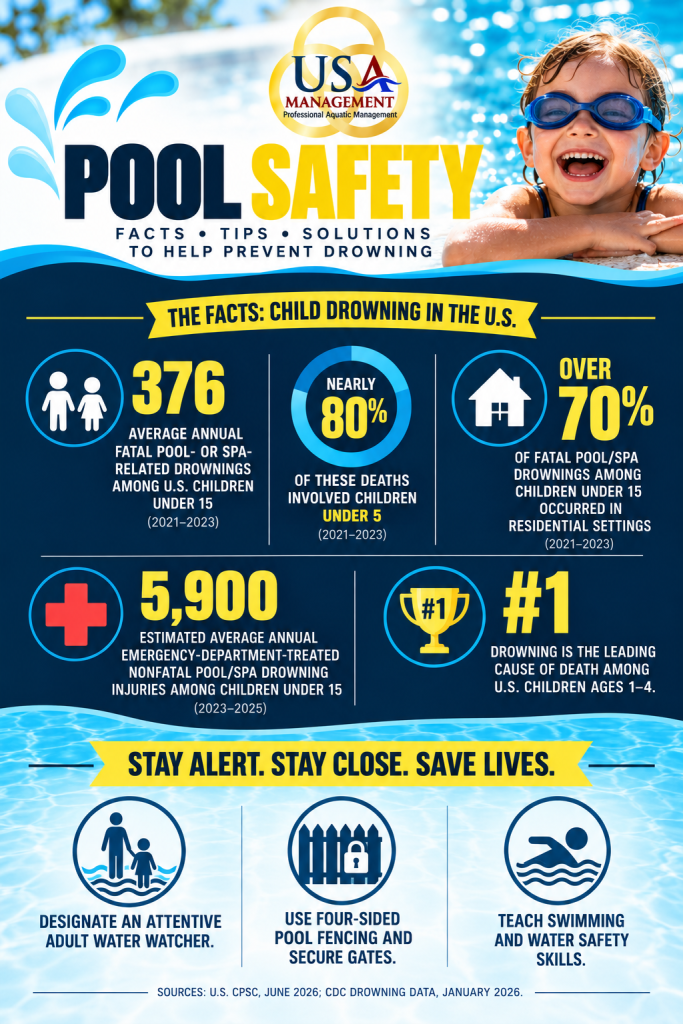
At USA Management, water safety starts with knowing each child’s swimming ability. Our swim testing program helps lifeguards identify swimmers who have demonstrated the required skills, with wristbands issued to children who successfully pass the swim test.
Children who do not pass must wear a U.S. Coast Guard-approved life jacket or have a parent or guardian in the water with them at all times, providing close, hands-on supervision.
Swimming skills, consistent pool rules, and attentive adult supervision all work together to create a safer aquatic environment. Through our KIDS SAFE programs, we’re committed to helping children build confidence and develop lifelong water safety habits.
Touch supervision means a parent or guardian must remain in the water and within arm’s reach of the child at all times. This allows an adult to provide immediate assistance if a child struggles in the water.
Watching from the pool deck or sitting nearby does not meet the requirements of touch supervision. The supervising adult must remain attentive, avoid distractions, and be ready to respond immediately.
No. USA Management’s Junior Lifesaving Program introduces children ages 12–14 to the responsibilities of a lifeguard and teaches fundamental water safety skills, but it does not provide professional lifeguard certification.
The program is an excellent introduction for children interested in becoming certified lifeguards when they meet the minimum age and training requirements.
Support the lifeguard’s instructions and reinforce the importance of following pool rules. Lifeguards are trained to recognize unsafe behavior and intervene before accidents occur.
Use the situation as an opportunity to explain why the rule exists and how following it helps protect everyone at the pool. Parents and lifeguards working together create a safer swimming environment.
A child’s swimming ability alone does not determine whether they are ready to visit a pool independently. Consider their age, maturity, judgment, ability to follow rules, and response to unexpected situations.
Always follow the aquatic facility’s minimum age and supervision policies. Even strong swimmers can encounter emergencies, and children should never swim alone.
Always remain in the water and within arm’s reach of infants and toddlers. Maintain constant, attentive supervision and never leave a young child unattended near water, even briefly.
Use properly fitted swim diapers when required, provide shade and appropriate sun protection, and ensure the water temperature is suitable for young children. Inflatable toys and flotation devices are not substitutes for adult supervision.
Water readiness involves more than being able to swim a short distance. Children should demonstrate the ability to enter and exit the water safely, control their breathing, float or tread water, turn around, and swim to safety.
USA Management’s swim testing program helps assess swimming ability and identify children who may require additional safety precautions.
Regardless of skill level, children must always receive appropriate adult supervision.
Introduce your child to water gradually in a calm, supportive environment. Begin with simple activities that help them feel comfortable, such as sitting near the pool, splashing with their hands, or practicing basic skills in shallow water with close adult supervision.
Avoid forcing a child into the water. Positive encouragement, patience, and age-appropriate swimming lessons can help build confidence over time.
Supervising multiple children around water requires careful planning and constant attention. Keep children together in an area appropriate for their swimming abilities, and never assume that older children can supervise younger ones.
Children who require touch supervision must have an adult in the water and within arm’s reach at all times. If you cannot provide the required level of supervision for every child, arrange for another responsible adult to help or postpone swimming.
Remember, lifeguards are not a substitute for parental supervision.
Have an open conversation about the consequences of unsafe swimming behaviors, including diving into shallow water, running on wet surfaces, roughhousing, breath-holding competitions, and swimming without appropriate supervision.
Encourage teenagers to make responsible decisions, follow lifeguard instructions, and speak up when friends engage in dangerous activities.
Remind them that strong swimming skills do not eliminate the risks associated with water.
Encourage children to dry their ears thoroughly after swimming. Tilt the head to each side to allow trapped water to drain, and gently dry the outer ear with a towel.
Avoid inserting cotton swabs or other objects into the ear canal. If your child experiences ear pain, itching, drainage, or reduced hearing, consult a healthcare professional.
Ask your child’s healthcare professional before using preventive ear drops, particularly if your child has ear tubes or a damaged eardrum.
Teach children to alert a lifeguard or responsible adult immediately if they see someone struggling in the water.
Children should never jump into the water to attempt a rescue themselves, as this can put both children in danger.
Encourage them to call for help, identify the person’s location, and follow the instructions of trained rescuers. If a safe reaching or throwing aid is available, an adult or trained rescuer may use it without entering the water.
Creating safer swimming environments starts with education, awareness, and teamwork. Discover how USA Management’s KIDS SAFE programs help promote water safety, build confidence, and encourage responsible swimming habits.
Contact our team to learn how we can support water safety at your aquatic facility.